
As technology evolves, so do user expectations. In 2026, we are see...
19 Feb 2026
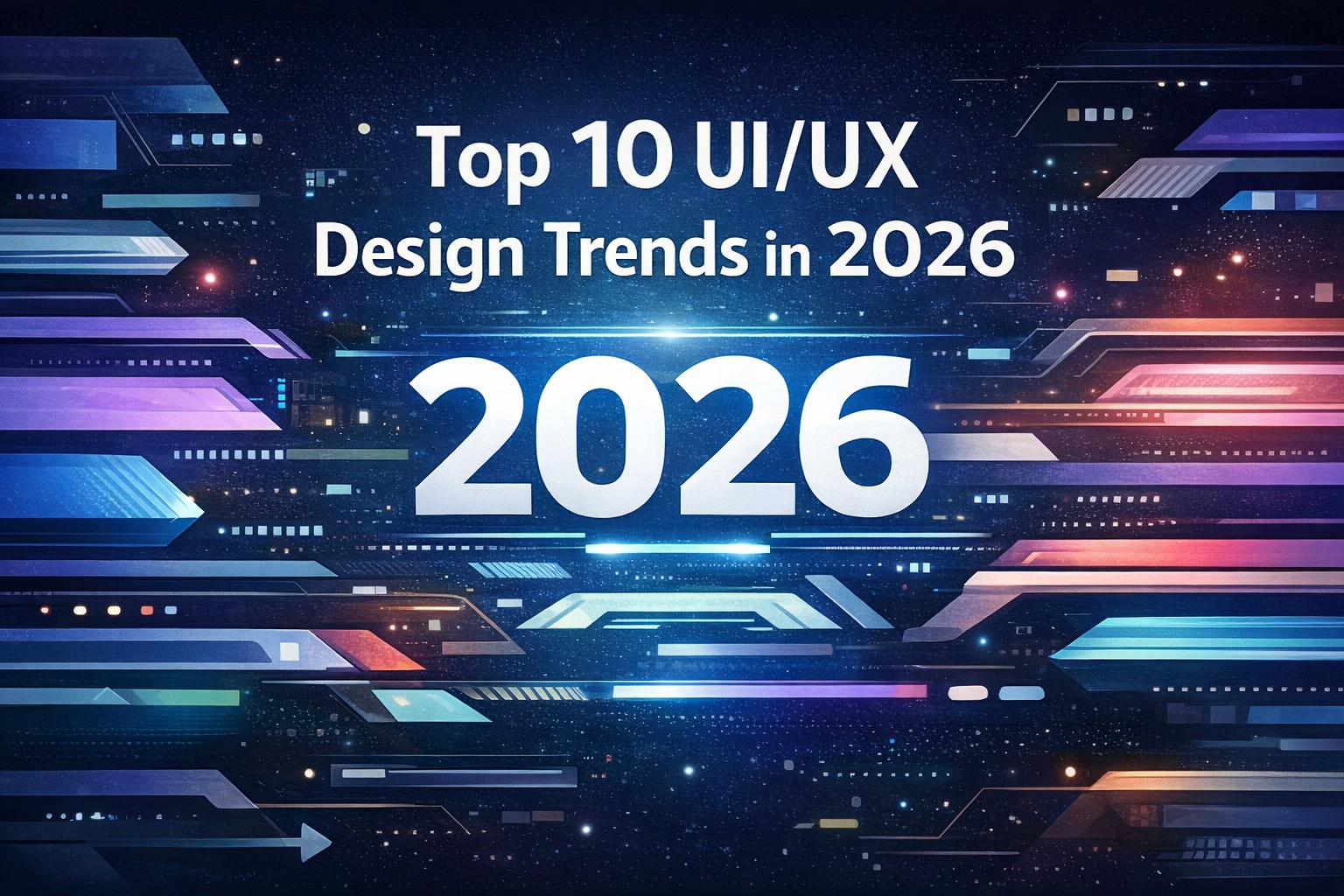
Top 10 UI/UX Design Trends in 2026
Continue Reading...


As technology evolves, so do user expectations. In 2026, we are seeing a shift towards more immersive, personalized, and ethical design practices. Staying ahead of these trends is crucial for designers and businesses alike to create digital experiences that resonate with users.
Here are the top 10 UI/UX design trends dominating the landscape in 2026.
Static interfaces are becoming a thing of the past. AI is now powering dynamic interfaces that adapt in real-time to user behavior, preferences, and context. From personalized layouts to content recommendations, interfaces are becoming more "intelligent" and user-centric.
With the rise of WebGL and better browser performance, 3D elements are no longer just for gaming sites. We're seeing subtle 3D interactions, floating objects, and depth effects that add a layer of realism and engagement to standard websites without sacrificing load speed.
Dark mode is now a standard, but in 2026, it's evolving. Designers are moving beyond pure black to deep blues, grays, and rich, dark gradients. This "Dark Mode 2.0" offers better contrast, reduced eye strain, and a more sophisticated aesthetic.
Micro-interactions are becoming more complex and meaningful. They are no longer just feedback for clicks but are used to guide users through a narrative. Think of a "submit" button that morphs into a delivery truck driving away – small details that delight users.
As voice search and smart speakers continue to grow, designing for voice is essential. This means creating conversational interfaces that can understand natural language and provide auditory feedback, moving beyond just visual interaction.
Digital sustainability is a major focus. Designers are prioritizing lightweight code, efficient assets, and "green hosting" to reduce the carbon footprint of websites. Minimalist designs that use less energy on user devices are gaining traction.
Stripping away the non-essential. 2026 sees a return to ample whitespace, large typography, and grid-based layouts. The focus is purely on content and functionality, removing any decorative elements that don't serve a clear purpose.
Glassmorphism is still here but has matured. We're seeing it combined with "claymorphism" (soft, 3D, floating shapes) to create unique, tactile interfaces that feel like they have physical depth and texture.
Scrolling is the new clicking. Websites are treating the scroll as a journey, with content revealing itself through dynamic transitions and animations as the user moves down the page. It turns passive reading into an interactive experience.
Accessibility is not a trend; it's a requirement. In 2026, inclusive design goes beyond color contrast. It includes designing for neurodiversity, offering content in multiple formats (text, audio, video), and ensuring interfaces are usable by everyone, regardless of ability.
The trends of 2026 reflect a maturing digital landscape where technology serves human needs more intuitively. By embracing these trends, you can create interfaces that are not only visually stunning but also deeply engaging, accessible, and future-proof.
Creative Head
As technology evolves, so do user expectations. In 2026, we are see...

In today's digital age, your website is often the first interac...
In the dynamic world...

In t...
In the dynamic landscape of online conten...
In the world of web and app de...